Buy dashphoto.eu ?
We are moving the project
dashphoto.eu .
Are you interested in purchasing the domain
dashphoto.eu ?
domain@kv-gmbh.de · 0541-91531010
Buy dashphoto.eu ?
Which camera is suitable for landscape and street photography?
For landscape photography, a camera with a high resolution sensor and wide dynamic range is ideal to capture the details and colors of the scenery. A full-frame DSLR or mirrorless camera with a wide-angle lens would be a good choice for capturing the vastness of landscapes. For street photography, a compact and discreet camera with fast autofocus and good low-light performance is preferred. A mirrorless camera with a prime lens or a high-quality compact camera would be suitable for capturing candid moments and street scenes without drawing too much attention. **
What is the difference between camera settings for landscape shots and portrait photos?
The main difference between camera settings for landscape shots and portrait photos is the aperture setting. For landscape shots, a smaller aperture (higher f-stop number) is typically used to achieve a larger depth of field and ensure that both the foreground and background are in focus. On the other hand, for portrait photos, a larger aperture (lower f-stop number) is often used to create a shallow depth of field, resulting in a blurred background that helps to emphasize the subject. Additionally, the focal length and composition may also vary between the two types of photography. **


Similar search terms for Does
Top-Angebote
Products related to Does:




-
How many watts does a continuous light need for portrait photography?
The number of watts needed for a continuous light in portrait photography can vary depending on the specific lighting setup and desired effect. However, a common recommendation is to use lights with a power output of at least 150 watts for portrait photography. This level of wattage typically provides enough light to properly illuminate the subject and create flattering lighting for portraits. It is important to consider factors such as the size of the shooting space, the distance between the light source and the subject, and the desired lighting intensity when determining the appropriate wattage for continuous lights in portrait photography. **
-
What does a photo calendar with portrait and landscape format look like?
A photo calendar with portrait format will have a taller orientation, similar to a standard piece of paper standing upright. This format is ideal for showcasing vertical photos and is commonly used for displaying individual or group portraits. On the other hand, a photo calendar with landscape format will have a wider orientation, similar to a standard piece of paper lying flat. This format is great for displaying horizontal photos and is often used for showcasing scenic landscapes or panoramic shots. Both formats can be used to create visually appealing and personalized calendars. **
-
How can one recognize a portrait photography?
Portrait photography can be recognized by its focus on capturing the personality, expression, and mood of the subject. The main subject of the photograph is typically a person, and the composition is often close-up to emphasize their features and emotions. The background is usually simple and unobtrusive, allowing the viewer to focus on the subject. Additionally, portrait photography often involves careful lighting and posing to highlight the subject's best features and convey a specific mood or emotion. **
-
How can you mix portrait and landscape videos?
To mix portrait and landscape videos, you can use video editing software to adjust the orientation of the videos. You can rotate the portrait videos to landscape orientation or vice versa to create a cohesive look. Additionally, you can use techniques such as adding borders or background images to seamlessly blend the different orientations together. Experimenting with different layouts and transitions can help you create a visually appealing video that combines both portrait and landscape footage. **

What are the key settings for landscape photography?
The key settings for landscape photography include a small aperture (high f-stop number) to ensure a large depth of field and sharp focus throughout the scene. A low ISO setting is recommended to reduce noise in the image, especially in well-lit conditions. A slow shutter speed can be used to capture movement in elements like water or clouds, while a tripod is essential to prevent camera shake. Additionally, using the camera's manual mode allows for full control over exposure settings to achieve the desired look for the landscape. **
What are the key settings in landscape photography?
The key settings in landscape photography include aperture, shutter speed, and ISO. Aperture controls the depth of field, allowing you to capture sharp details in both the foreground and background. Shutter speed determines how motion is captured in the scene, whether you want to freeze action or create a sense of movement. ISO affects the camera's sensitivity to light, with lower ISO values producing cleaner images in well-lit conditions. By understanding and adjusting these settings, you can create stunning landscape photographs with the desired visual impact. **
Top-Angebote
Products related to Does:
-
Which camera is suitable for landscape and street photography?
For landscape photography, a camera with a high resolution sensor and wide dynamic range is ideal to capture the details and colors of the scenery. A full-frame DSLR or mirrorless camera with a wide-angle lens would be a good choice for capturing the vastness of landscapes. For street photography, a compact and discreet camera with fast autofocus and good low-light performance is preferred. A mirrorless camera with a prime lens or a high-quality compact camera would be suitable for capturing candid moments and street scenes without drawing too much attention. **
-
What is the difference between camera settings for landscape shots and portrait photos?
The main difference between camera settings for landscape shots and portrait photos is the aperture setting. For landscape shots, a smaller aperture (higher f-stop number) is typically used to achieve a larger depth of field and ensure that both the foreground and background are in focus. On the other hand, for portrait photos, a larger aperture (lower f-stop number) is often used to create a shallow depth of field, resulting in a blurred background that helps to emphasize the subject. Additionally, the focal length and composition may also vary between the two types of photography. **
-
How many watts does a continuous light need for portrait photography?
The number of watts needed for a continuous light in portrait photography can vary depending on the specific lighting setup and desired effect. However, a common recommendation is to use lights with a power output of at least 150 watts for portrait photography. This level of wattage typically provides enough light to properly illuminate the subject and create flattering lighting for portraits. It is important to consider factors such as the size of the shooting space, the distance between the light source and the subject, and the desired lighting intensity when determining the appropriate wattage for continuous lights in portrait photography. **
-
What does a photo calendar with portrait and landscape format look like?
A photo calendar with portrait format will have a taller orientation, similar to a standard piece of paper standing upright. This format is ideal for showcasing vertical photos and is commonly used for displaying individual or group portraits. On the other hand, a photo calendar with landscape format will have a wider orientation, similar to a standard piece of paper lying flat. This format is great for displaying horizontal photos and is often used for showcasing scenic landscapes or panoramic shots. Both formats can be used to create visually appealing and personalized calendars. **
Similar search terms for Does
-
Hodder & Stoughton Where Does it Hurt?: What the Junior Doctor did next by Max PembertonThe sequel to the bestselling Trust Me, I'm a (Junior) Doctor. The junior doctor is back, but working on the streets for the Phoenix Outreach Project. Unfortunately, his first year in a hospital hasn't quite prepared him for it ... He's into his second year of medicine, but this time Max is out of the wards and onto the streets, working for the Phoenix Outreach Project. Fuelled by tea and more enthusiasm than experience, he attempts to locate and treat a wide and colourful range of patients that somehow his first year on the wards didn't prepare him for . . . from Molly the 80-year-old drugs mule and God in a Tesco car park, to middle-class mums addicted to appearances and pain killers in equal measure. His friends don't approve of the turn his career is taking, his mother is worried and the public spit at him, but Max is determined to make a difference. Despite warnings that miracles are rare, and that not everyone's life can be turned around, Max is still surprised by those that can be saved. Funny, touching and uplifting, Max goes from innocence to experience via dustbin-shopping-trips without ever losing his humanity.3,99 £*Shipping: 1,99 £Secure redirect to the provider
-
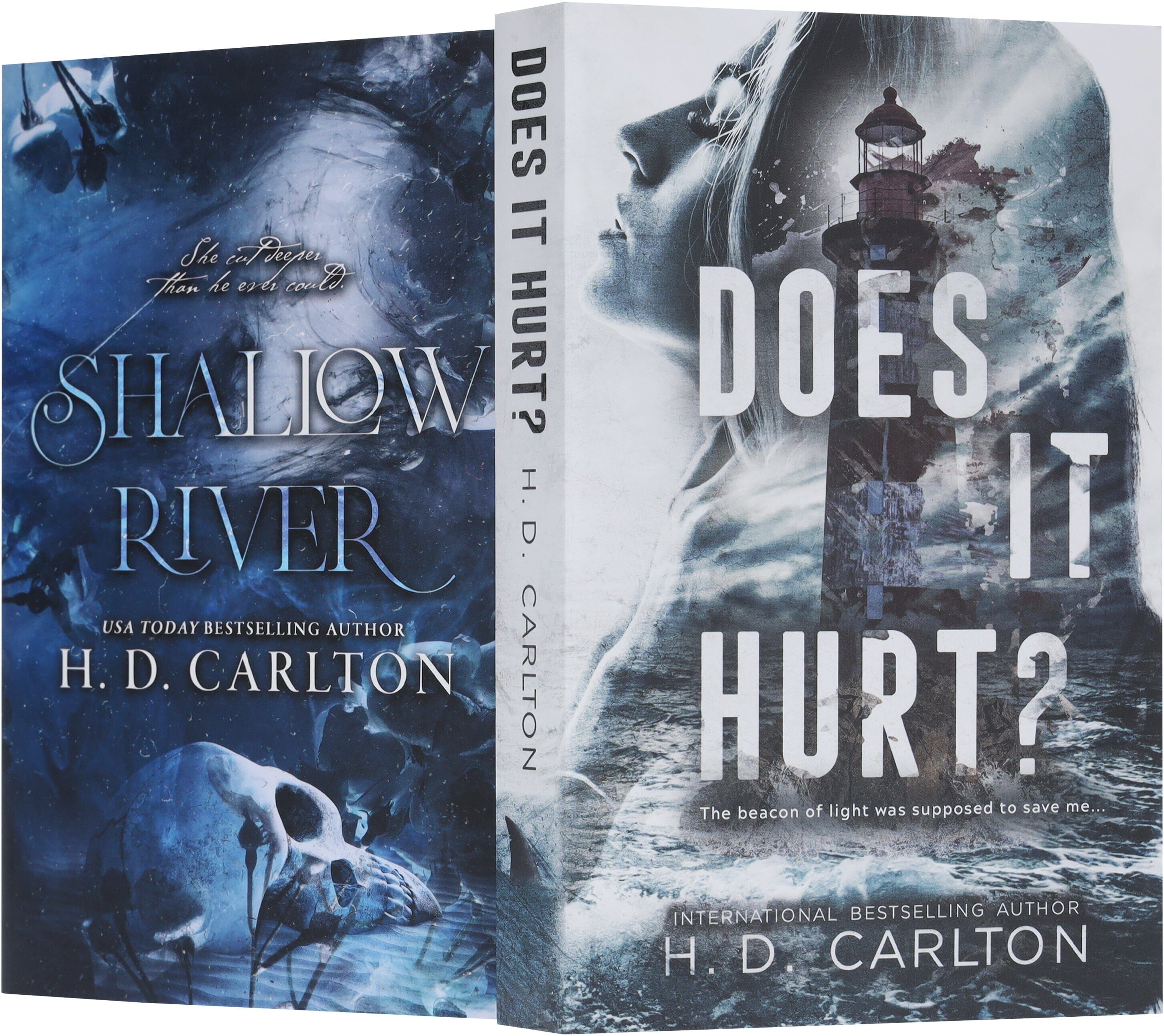
H. D. Carlton Collection (Does It Hurt? & Shallow River) 2 Books Set - Fiction - Paperback ZandoTitles in this Set: 1. Does It Hurt? 2. Shallow River Description: Does It Hurt? Who am I? I've forgotten the answer to that question long ago. Ever since I ran from that house, so desperate to escape, I left with only the clothes on my back and socks on my feet. After that day, I've only ever walked in stolen shoes. Could I be a girl who is searching for the meaning of life in faceless men? They were all so forgettable. Until he came along. He took me under a waterfall and made me forget my name, and in return, I took his instead. Enzo Vitale. An enigmatic man that will only ever love the deep sea. Or rather the predators that inhabit it. Turns out, he's not so different than the monsters he feeds. He lured me onto his boat like a fish in the ocean, seeking vengeance for my crime. Had I realized his intentions, and that a massive storm would leave us shipwrecked, I would've run. Now, I'm a girl who's seeking refuge in a decrepit lighthouse with a man who loathes me almost as much as he craves me. He wants to hurt me, but the old caretaker of the abandoned island may have intentions far more sinister. It's no longer a question of who I am, but rather, will I survive? Shallow River Shallow Hill is where souls suffer slow and miserable deaths. When River McAllister escaped from Shallow Hill, she left her innocence behind―and some of her sanity, too. Now she's rebuilding her life with her dream man and life couldn't be better. Ryan Fitzgerald is everything you'd want in a man. Attractive, rich, an aspiring lawyer, and would do anything to keep River. But that's not the only thing that attracts her. It's his attentiveness, his possessiveness... maybe not so much his temper. When her relationship takes a dark turn, Ryan's estranged brother, Mako, is the only one who sees it. He knows exactly what Ryan is capable of, and it's not the first time he had to be a knight in shining armor. River came from Shallow Hill, though. She's never needed saving before. What Mako doesn'tsee, is that River is perfectly capable of taking care of herself. The only one who should be scared is Ryan.24,99 £*Shipping: 2,99 £Secure redirect to the provider
-
How can one recognize a portrait photography?
Portrait photography can be recognized by its focus on capturing the personality, expression, and mood of the subject. The main subject of the photograph is typically a person, and the composition is often close-up to emphasize their features and emotions. The background is usually simple and unobtrusive, allowing the viewer to focus on the subject. Additionally, portrait photography often involves careful lighting and posing to highlight the subject's best features and convey a specific mood or emotion. **
-
How can you mix portrait and landscape videos?
To mix portrait and landscape videos, you can use video editing software to adjust the orientation of the videos. You can rotate the portrait videos to landscape orientation or vice versa to create a cohesive look. Additionally, you can use techniques such as adding borders or background images to seamlessly blend the different orientations together. Experimenting with different layouts and transitions can help you create a visually appealing video that combines both portrait and landscape footage. **
-
What are the key settings for landscape photography?
The key settings for landscape photography include a small aperture (high f-stop number) to ensure a large depth of field and sharp focus throughout the scene. A low ISO setting is recommended to reduce noise in the image, especially in well-lit conditions. A slow shutter speed can be used to capture movement in elements like water or clouds, while a tripod is essential to prevent camera shake. Additionally, using the camera's manual mode allows for full control over exposure settings to achieve the desired look for the landscape. **
-
What are the key settings in landscape photography?
The key settings in landscape photography include aperture, shutter speed, and ISO. Aperture controls the depth of field, allowing you to capture sharp details in both the foreground and background. Shutter speed determines how motion is captured in the scene, whether you want to freeze action or create a sense of movement. ISO affects the camera's sensitivity to light, with lower ISO values producing cleaner images in well-lit conditions. By understanding and adjusting these settings, you can create stunning landscape photographs with the desired visual impact. **
* All prices are inclusive of VAT and, if applicable, plus shipping costs. The offer information is based on the details provided by the respective shop and is updated through automated processes. Real-time updates do not occur, so deviations can occur in individual cases. ** Note: Parts of this content were created by AI.