Buy dashphoto.eu ?
We are moving the project
dashphoto.eu .
Are you interested in purchasing the domain
dashphoto.eu ?
domain@kv-gmbh.de · 0541-91531010
Buy dashphoto.eu ?
What are conjunctional clauses, relative clauses, demonstrative clauses, and infinitive clauses?
Conjunctional clauses are dependent clauses that are introduced by a conjunction, such as "because," "although," or "while." They provide additional information about the main clause in a sentence. Relative clauses are also dependent clauses that provide more information about a noun in the main clause. They are introduced by relative pronouns like "who," "which," or "that." Demonstrative clauses are dependent clauses that function as adjectives and provide more information about a noun in the main clause. They are introduced by demonstrative pronouns like "this," "that," "these," or "those." Infinitive clauses are dependent clauses that are formed with an infinitive verb (to + base form of the verb). They can function as nouns, adjectives, or adverbs in a sentence. **
Are conjunctive clauses always adverbial clauses?
No, conjunctive clauses are not always adverbial clauses. While adverbial clauses are a type of conjunctive clause that function as adverbs to modify verbs, adjectives, or other adverbs, there are also other types of conjunctive clauses. For example, there are conjunctive clauses that function as noun clauses, such as in "I know that you are busy." In this sentence, "that you are busy" is a conjunctive clause functioning as a noun clause, not an adverbial clause. Therefore, conjunctive clauses can serve various grammatical functions beyond just adverbial clauses. **


Similar search terms for Clauses
Top-Angebote
Products related to Clauses:
-
Fusion Finds Portable Selfie Mirror For Phone Camera Photography & Vlogging Travel Accessory 1pcCapture creative shots from fresh perspectives with this photography mirror designed for photographers, vloggers, and content creators. This compact handheld convex mirror helps you achieve unique reflections, artistic compositions, and eyecatching...29,97 $*Shipping: 0,00 $Secure redirect to the provider
-
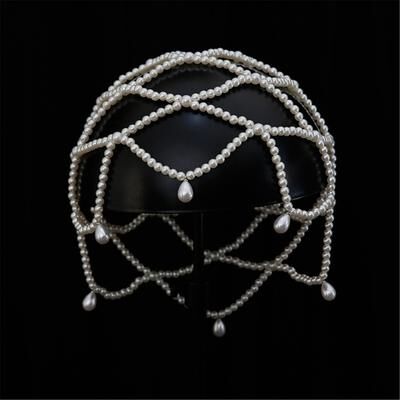
Fabled Fashion Studio Pearl Bridal Headband For Weddings And Photography Pearl Bridal Headband For Weddings And PhotographyYour wedding day or special photoshoot deserves a touch of timeless elegance that makes you feel unforgettable. This exquisite bridal hair accessory weaves delicate mesh with glowing faux pearls to create a stunning crown fit for your most cherished...49,97 $*Shipping: 0,00 $Secure redirect to the provider
-
Fusion Finds Portable Selfie Mirror For Phone Photography & Vlogging 5cm Round Reflection Camera Mirror 1pcsExperience a whole new way to capture creative content with this compact photography mirror. Designed for photographers, vloggers, travelers, and content creators, this portable round reflection mirror helps you achieve unique angles and eyecatching...29,97 $*Shipping: 0,00 $Secure redirect to the provider



-
What are relative clauses and conjunctional clauses?
Relative clauses are clauses that provide additional information about a noun in the main clause. They are introduced by relative pronouns such as "who," "which," "that," and "whom." For example, in the sentence "The book that I read is very interesting," the relative clause "that I read" provides more information about the noun "book." Conjunctional clauses, on the other hand, are clauses that are connected to the main clause by conjunctions such as "and," "but," "or," "if," and "because." They can express relationships such as addition, contrast, alternative, condition, and cause. For example, in the sentence "I will go to the park if the weather is nice," the conjunctional clause "if the weather is nice" expresses a condition for the action in the main clause. **
-
What are the French conditional clauses (si-clauses)?
French conditional clauses, also known as si-clauses, are used to express a hypothetical situation and its potential outcome. They consist of two parts: the si clause (if clause), which describes the condition, and the main clause, which describes the potential result. The si clause is typically formed using the conjunction "si" followed by the imperfect tense or the pluperfect tense, while the main clause is formed using the conditional tense. These clauses are commonly used to talk about what would happen in certain situations if a specific condition were met. **
-
How can one recognize main clauses and subordinate clauses?
Main clauses can stand alone as complete sentences, while subordinate clauses cannot. Subordinate clauses often begin with subordinating conjunctions such as "although," "because," "if," "when," or "while." They also often contain a subject and a verb, but they do not express a complete thought on their own. Main clauses, on the other hand, express a complete thought and can function as independent sentences. By identifying these characteristics, one can recognize main and subordinate clauses in a sentence. **
-
How can adverbial clauses be used as subordinate clauses?
Adverbial clauses can be used as subordinate clauses to provide additional information about the main clause. They can modify the verb in the main clause by expressing time, place, manner, condition, reason, purpose, or concession. For example, in the sentence "She went to bed after she finished her homework," the adverbial clause "after she finished her homework" provides information about the timing of the main action "She went to bed." Adverbial clauses are introduced by subordinating conjunctions such as after, before, while, since, because, if, although, etc. **

How can subordinate clauses be rewritten as main clauses?
Subordinate clauses can be rewritten as main clauses by removing the subordinating conjunction and making any necessary adjustments to the verb tense or word order. For example, the subordinate clause "because she was tired" can be rewritten as the main clause "she was tired." This transformation allows the subordinate clause to stand alone as a complete sentence. Additionally, any pronouns or other words that were dependent on the subordinating conjunction may need to be adjusted to ensure the new main clause is grammatically correct. **
How do I transform subordinate clauses into main clauses?
To transform a subordinate clause into a main clause, you need to make sure that the clause can stand alone as a complete sentence. This means adding a subject and a verb to the clause if it doesn't already have them. You may also need to adjust the word order or add any necessary punctuation. Once these changes are made, the subordinate clause will become a main clause that can function independently within a sentence. **
Top-Angebote
Products related to Clauses:
-
Enesco/Dept 56 More Letters for the Clauses African American Clothtique Red , RedEvery year, Mr. and Mrs. Claus are eager to receive and read More Letters for the Clauses. The red mailbox has holiday accents including holly leaves, red berries, and a red bow; it is filled with wrapped packages and rolled-up letters. This happy,...149,99 $*Shipping: 20,95 $Secure redirect to the provider
-
Insta360 X4-8K Waterproof 360 Action Camera, 4K Wide-Angle Video, Removable Lens Guards, 135 Min Battery Life, AI Editing, NewThe iiyama ProLite XUB2463HSU-B1 is a high-performance Full HD LED monitor designed to enhance your productivity and viewing experience. With a 24-inch screen size and 1920x1080 resolution, this monitor delivers sharp and clear visuals, perfect for both work and entertainment. The IPS panel ensures consistent color accuracy and wide viewing angles, while the adjustable stand allows for ergonomic positioning to suit your comfort. Whether you're editing photos, working on documents, or streaming content, the iiyama ProLite XUB2463HSU-B1 offers reliable performance and versatility. Key Features: Display: 24-inch Full HD (1920x1080) LED screen for crisp and clear visuals Panel Type: IPS technology for accurate colors and wide viewing angles Connectivity: Multiple input options including HDMI, DisplayPort, and VGA Adjustability: Height-adjustable stand with tilt, swivel, and pivot options for ergonomic comfort Built-in Speakers: Integrated stereo speakers for convenient audio output Design: Slim bezel design for a modern, professional look Eye Care: Flicker-free and blue light reduction features to reduce eye strain during long sessions399,99 £*Shipping: 0,00 £Secure redirect to the provider
-
Fusion Finds Portable Selfie Mirror For Phone Camera Photography & Vlogging Travel Accessory 1pcCapture creative shots from fresh perspectives with this photography mirror designed for photographers, vloggers, and content creators. This compact handheld convex mirror helps you achieve unique reflections, artistic compositions, and eyecatching...29,97 $*Shipping: 0,00 $Secure redirect to the provider
-
Fabled Fashion Studio Pearl Bridal Headband For Weddings And Photography Pearl Bridal Headband For Weddings And PhotographyYour wedding day or special photoshoot deserves a touch of timeless elegance that makes you feel unforgettable. This exquisite bridal hair accessory weaves delicate mesh with glowing faux pearls to create a stunning crown fit for your most cherished...49,97 $*Shipping: 0,00 $Secure redirect to the provider
-
What are conjunctional clauses, relative clauses, demonstrative clauses, and infinitive clauses?
Conjunctional clauses are dependent clauses that are introduced by a conjunction, such as "because," "although," or "while." They provide additional information about the main clause in a sentence. Relative clauses are also dependent clauses that provide more information about a noun in the main clause. They are introduced by relative pronouns like "who," "which," or "that." Demonstrative clauses are dependent clauses that function as adjectives and provide more information about a noun in the main clause. They are introduced by demonstrative pronouns like "this," "that," "these," or "those." Infinitive clauses are dependent clauses that are formed with an infinitive verb (to + base form of the verb). They can function as nouns, adjectives, or adverbs in a sentence. **
-
Are conjunctive clauses always adverbial clauses?
No, conjunctive clauses are not always adverbial clauses. While adverbial clauses are a type of conjunctive clause that function as adverbs to modify verbs, adjectives, or other adverbs, there are also other types of conjunctive clauses. For example, there are conjunctive clauses that function as noun clauses, such as in "I know that you are busy." In this sentence, "that you are busy" is a conjunctive clause functioning as a noun clause, not an adverbial clause. Therefore, conjunctive clauses can serve various grammatical functions beyond just adverbial clauses. **
-
What are relative clauses and conjunctional clauses?
Relative clauses are clauses that provide additional information about a noun in the main clause. They are introduced by relative pronouns such as "who," "which," "that," and "whom." For example, in the sentence "The book that I read is very interesting," the relative clause "that I read" provides more information about the noun "book." Conjunctional clauses, on the other hand, are clauses that are connected to the main clause by conjunctions such as "and," "but," "or," "if," and "because." They can express relationships such as addition, contrast, alternative, condition, and cause. For example, in the sentence "I will go to the park if the weather is nice," the conjunctional clause "if the weather is nice" expresses a condition for the action in the main clause. **
-
What are the French conditional clauses (si-clauses)?
French conditional clauses, also known as si-clauses, are used to express a hypothetical situation and its potential outcome. They consist of two parts: the si clause (if clause), which describes the condition, and the main clause, which describes the potential result. The si clause is typically formed using the conjunction "si" followed by the imperfect tense or the pluperfect tense, while the main clause is formed using the conditional tense. These clauses are commonly used to talk about what would happen in certain situations if a specific condition were met. **
Similar search terms for Clauses
-
Fusion Finds Portable Selfie Mirror For Phone Photography & Vlogging 5cm Round Reflection Camera Mirror 1pcsExperience a whole new way to capture creative content with this compact photography mirror. Designed for photographers, vloggers, travelers, and content creators, this portable round reflection mirror helps you achieve unique angles and eyecatching...29,97 $*Shipping: 0,00 $Secure redirect to the provider
-
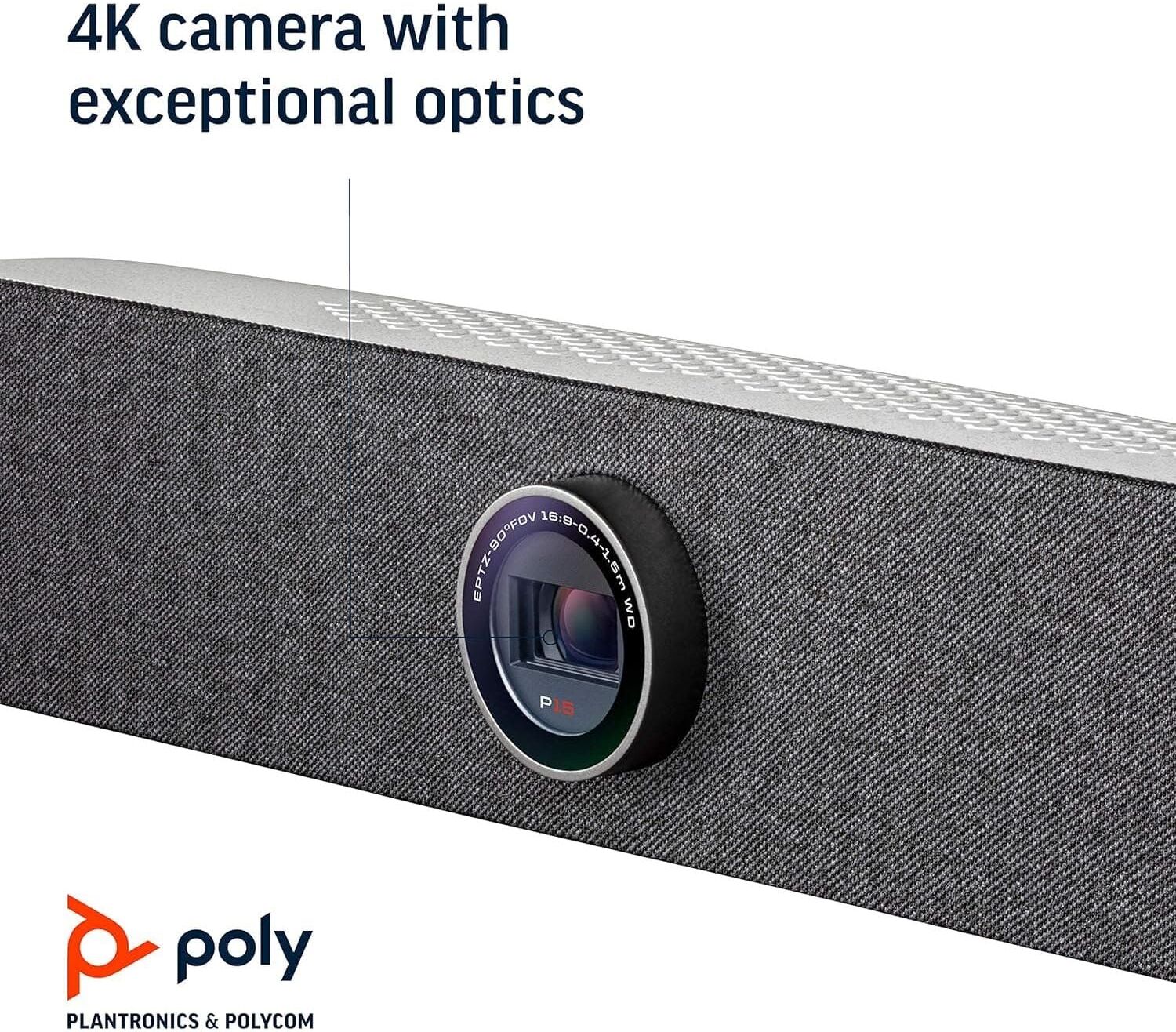
Poly Studio P15 Personal Video Bar - Premium 4K Webcam - Camera, Mics & SpeakerElevate your video conferencing and streaming experience with the Poly Studio P15 Personal Video Bar — a cutting-edge solution designed for superior quality and crystal-clear communication. Whether you're working from home, leading virtual meetings, or engaging with friends and family, the Poly Studio P15 brings you the best in 4K video quality, top-tier microphones, and powerful speakers all in one sleek, compact device. With advanced features like automatic framing, noise-canceling microphones, and a built-in speaker, the Poly Studio P15 ensures that every call is smooth, clear, and professional. Ideal for professionals, remote workers, and content creators, this premium video bar makes it easier than ever to stay connected in the digital world. 🔶 ( 4K Ultra HD Camera ) – Enjoy sharp, lifelike video with the 4K resolution camera for a true-to-life visual experience. 🔶 ( Smart Framing ) – Automatic camera adjustments ensure you’re always perfectly framed, no matter where you move. 🔶 ( Noise-Canceling Microphones ) – Equipped with advanced noise-blocking technology, your voice is heard clearly, even in noisy environments. 🔶 ( High-Quality Speakers ) – Built-in speakers deliver immersive sound, making every conversation crisp and clear. 🔶 ( Plug-and-Play Setup ) – Easy installation with no complex software or hardware required. 🔶 ( USB Plug Connectivity ) – Compatible with all leading video conferencing platforms via USB connection for instant use. 🔶 ( Compact and Sleek Design ) – The space-saving design fits perfectly on any desk or workspace without clutter. 🔶 ( Professional-Grade Video and Audio ) – Ideal for high-quality video calls, webinars, and content creation with professional-level performance. 🔶 ( Compatible with Leading Platforms ) – Works seamlessly with Zoom, Microsoft Teams, Skype, Google Meet, and other major video conferencing tools. 🔶 ( Privacy and Security Features ) – Built-in camera privacy shutter for enhanced security when not in use. With the Poly Studio P15 Personal Video Bar, you get everything you need for the ultimate video communication setup. From its stunning 4K camera and high-quality audio to its user-friendly design, this device is perfect for anyone looking to boost their virtual interactions. Stay professional, stay connected, and enhance your digital presence with ease.549,98 £*Shipping: 0,00 £Secure redirect to the provider
-
How can one recognize main clauses and subordinate clauses?
Main clauses can stand alone as complete sentences, while subordinate clauses cannot. Subordinate clauses often begin with subordinating conjunctions such as "although," "because," "if," "when," or "while." They also often contain a subject and a verb, but they do not express a complete thought on their own. Main clauses, on the other hand, express a complete thought and can function as independent sentences. By identifying these characteristics, one can recognize main and subordinate clauses in a sentence. **
-
How can adverbial clauses be used as subordinate clauses?
Adverbial clauses can be used as subordinate clauses to provide additional information about the main clause. They can modify the verb in the main clause by expressing time, place, manner, condition, reason, purpose, or concession. For example, in the sentence "She went to bed after she finished her homework," the adverbial clause "after she finished her homework" provides information about the timing of the main action "She went to bed." Adverbial clauses are introduced by subordinating conjunctions such as after, before, while, since, because, if, although, etc. **
-
How can subordinate clauses be rewritten as main clauses?
Subordinate clauses can be rewritten as main clauses by removing the subordinating conjunction and making any necessary adjustments to the verb tense or word order. For example, the subordinate clause "because she was tired" can be rewritten as the main clause "she was tired." This transformation allows the subordinate clause to stand alone as a complete sentence. Additionally, any pronouns or other words that were dependent on the subordinating conjunction may need to be adjusted to ensure the new main clause is grammatically correct. **
-
How do I transform subordinate clauses into main clauses?
To transform a subordinate clause into a main clause, you need to make sure that the clause can stand alone as a complete sentence. This means adding a subject and a verb to the clause if it doesn't already have them. You may also need to adjust the word order or add any necessary punctuation. Once these changes are made, the subordinate clause will become a main clause that can function independently within a sentence. **
* All prices are inclusive of VAT and, if applicable, plus shipping costs. The offer information is based on the details provided by the respective shop and is updated through automated processes. Real-time updates do not occur, so deviations can occur in individual cases. ** Note: Parts of this content were created by AI.